

Designing a kitchen is one of the most exciting parts of a home renovation, but it’s also where many homeowners unknowingly make costly mistakes. From inefficient layouts and inadequate lighting to poor storage planning, small missteps can lead to daily frustrations and long-term regrets that affect both functionality and property value.
At NH Kitchen Design, we help homeowners across the UK create bespoke kitchens that seamlessly blend beauty, practicality, and flawless execution. Our experienced team has witnessed countless renovation projects and understands exactly where things can go wrong – and more importantly, how to get them right from the start.
In this comprehensive guide, we’ll reveal the most common kitchen design mistakes, particularly those that plague small kitchens, and provide expert insight and tailored solutions to help you avoid these costly pitfalls.
Mistake #1: Poor Kitchen Triangle Layout
The kitchen “work triangle” – the imaginary lines connecting your sink, hob, and fridge – forms the backbone of kitchen efficiency. This fundamental design principle has guided kitchen planning for decades, yet it’s still one of the most frequently misunderstood aspects of layout design.
When this triangle is poorly planned, you’ll find yourself constantly crisscrossing the kitchen, bumping into units or other family members, struggling to cook and clean efficiently, and generally feeling frustrated with your space. The ideal triangle should measure between 4-9 metres in total perimeter, with each leg being between 1.2-2.7 metres long.
How to Avoid Poor Triangle Planning
Always prioritise clear and accessible paths between your cooking, cleaning, and food storage zones. Consider how you naturally move through your kitchen during meal preparation – from retrieving ingredients from the fridge to washing up at the sink.
At NH Kitchen Design, our bespoke kitchen planning services ensure your layout fits both your physical space and lifestyle. Whether your kitchen is a compact galley measuring just 2 metres wide or an expansive open-plan area spanning 6 metres, we optimise the triangle to suit your specific needs and cooking habits.
Mistake #2: Inadequate Storage Planning
Storage planning failures represent one of the most widespread kitchen design mistakes we encounter. We’ve seen cupboards with wasted vertical space reaching to ceilings that remain empty, awkward corners that become black holes for forgotten items, and drawers so shallow they barely hold cutlery, let alone the cooking equipment modern families require.
Poor storage planning is particularly problematic in small kitchen designs, where every centimetre counts. Many homeowners underestimate their storage needs, failing to account for everything from large serving platters to small appliances, cleaning supplies, and the inevitable accumulation of kitchen gadgets that modern cooking demands.
Smart Storage Solutions for Every Kitchen
Maximise every inch with custom cabinets designed specifically for your space. Deep pan drawers can hold heavy cookware while remaining easily accessible, pull-out larder units bring back-of-cupboard items to the front, and corner carousels transform awkward spaces into functional storage.
Our innovative kitchen storage solutions cleverly use ceiling height with tall units, transform awkward nooks into spice storage, and turn underutilised zones into seamless storage systems. These solutions are particularly effective in compact kitchens where traditional storage approaches simply don’t work.
For inspiration on how creative storage can transform your space, explore our kitchen design gallery showcasing real-world storage solutions in UK homes of all sizes.
Mistake #3: Insufficient Lighting Choices
Lighting often receives minimal attention during kitchen planning, with homeowners focusing primarily on cabinets, colours, and finishes. However, inadequate lighting can dramatically affect both your mood and how effectively you can use your kitchen. Relying solely on one overhead fixture creates harsh shadows over worktops, making meal preparation inefficient and potentially unsafe.
Poor lighting also affects the perceived size and ambiance of your kitchen. A well-lit space feels larger, more welcoming, and more functional than one dominated by a single central light source.
Recommended Lighting Strategy
Layered lighting is essential for a truly functional kitchen. This approach combines three types of lighting: ambient (general ceiling lights), task (under-cabinet LED strips), and accent (pendant lights over islands or decorative features).
Task lighting is particularly crucial over work areas, while ambient lighting provides overall illumination. Accent lighting adds character and can highlight special features like glass-fronted cabinets or architectural details.
At NH Kitchen Design, we recommend professional kitchen lighting systems that include dimmable under-cabinet LEDs and adjustable lighting to enhance both visibility during cooking and ambiance during entertaining.
Mistake #4: Ignoring Ventilation Requirements
Ventilation represents one of the most technically important yet commonly overlooked aspects of kitchen design. Without proper ventilation, lingering cooking odours, excess condensation, and even mould can become serious long-term problems, particularly in open kitchen-dining spaces that are increasingly popular in modern UK homes.
Poor ventilation also affects indoor air quality, potentially causing health issues and damaging your property through excess moisture. This is especially problematic in well-insulated modern homes where natural air circulation is limited.
Avoiding Ventilation Failures
Choose quiet, high-performance extractor hoods that complement your kitchen design while meeting functional requirements. Modern extraction systems can be integrated invisibly into cabinetry, maintaining clean design lines while providing powerful ventilation.
Our installation specialists recommend models that exceed UK Building Regulations requirements and can be seamlessly integrated into your cabinetry. We ensure proper ducting, appropriate extraction rates for your cooking style, and compliance with all safety standards.
For specific guidance on ventilation requirements for your space, contact our team for a professional ventilation consultation.
Mistake #5: Overcrowding in Small Kitchens
Small kitchen design mistakes often stem from attempting to squeeze too many units, appliances, or decorative features into limited space. This approach invariably makes compact kitchens feel cluttered, cramped, and uncomfortable to use, defeating the purpose of the renovation.
Overcrowding also impedes functionality, making it difficult to move around comfortably or access storage and appliances efficiently. The result is a kitchen that looks busy rather than purposeful.
Space-Smart Design Solutions
Less is often more in smaller kitchens, but this doesn’t mean sacrificing functionality. Smart layouts feature carefully chosen multi-functional pieces like breakfast bars with integrated storage, slimline appliances that don’t dominate the space, and floating shelves that provide storage without visual weight.
Our compact kitchen design solutions ensure every element earns its place through either function or beauty – ideally both. We specialise in creating breathing room in tight spaces while maximising practical storage and work surface area.
Mistake #6: Choosing Style Over Function
While visual appeal is important, many kitchen design flaws stem from prioritising aesthetics over practicality. High-gloss surfaces might look stunning in showrooms but show every fingerprint and water mark in real-world use. Similarly, all-white cabinetry can prove challenging to maintain in busy family kitchens with children or pets.
This mistake becomes particularly costly over time, as beautiful but impractical choices lead to daily frustration and higher maintenance requirements.
Balanced Kitchen Design Philosophy
Our function-first, design-conscious approach carefully balances everyday usability with visual appeal. We work exclusively with wear-resistant, easy-clean materials that maintain their beauty over years of daily use.
Options include laminate quartz worktops that resist staining and scratching, matt-finish cabinetry that hides fingerprints while looking sophisticated, and carefully selected hardware that withstands heavy use. Browse our comprehensive kitchen materials and finishes guide to explore surfaces that combine lasting beauty with practical performance.
Mistake #7: Lack of Future-Proofing
Your kitchen should adapt as your family grows, ages, or your lifestyle changes. Yet homeowners frequently overlook accessibility considerations, potential resale value, or features that could simplify daily life in the long term. This short-sighted approach can necessitate expensive modifications later or limit your home’s appeal to future buyers.
Future-proofing encompasses everything from universal design principles that accommodate changing mobility to technological infrastructure that supports evolving appliance needs.
How We Future-Proof Kitchen Projects
Our designers think systematically about longevity, incorporating soft-close drawers that remain gentle on aging hands, accessible storage solutions that don’t require stretching or bending, and adaptable layouts that can accommodate changing needs.
We also consider technological future-proofing, ensuring adequate electrical infrastructure for evolving appliance needs and smart home integration. Whether you’re planning for aging in place or potential resale, our long-term kitchen planning approach helps you invest wisely in your home’s future.
Mistake #8: Inaccurate Measurements and DIY Approaches
Self-planning or relying on off-the-shelf solutions often leads to significant problems, particularly when dealing with period properties where walls may not be straight or ceilings may not be level. Even measurements that are off by mere millimetres can prevent appliances from fitting correctly or create unsightly gaps between units.
DIY approaches also frequently overlook technical requirements like electrical positioning, plumbing modifications, or structural considerations that affect both functionality and safety compliance.
Value of Professional Planning and Installation
Our thorough onsite measurements use laser-level equipment to ensure complete accuracy. Professional CAD planning allows us to identify and resolve potential issues before installation begins, while our compliance with UK Building Regulations ensures your kitchen meets all safety and performance standards.
NH Kitchen Design’s comprehensive design consultation process and experienced installation team handle everything from structural quirks to electrical and plumbing requirements, ensuring no surprises on fitting day.
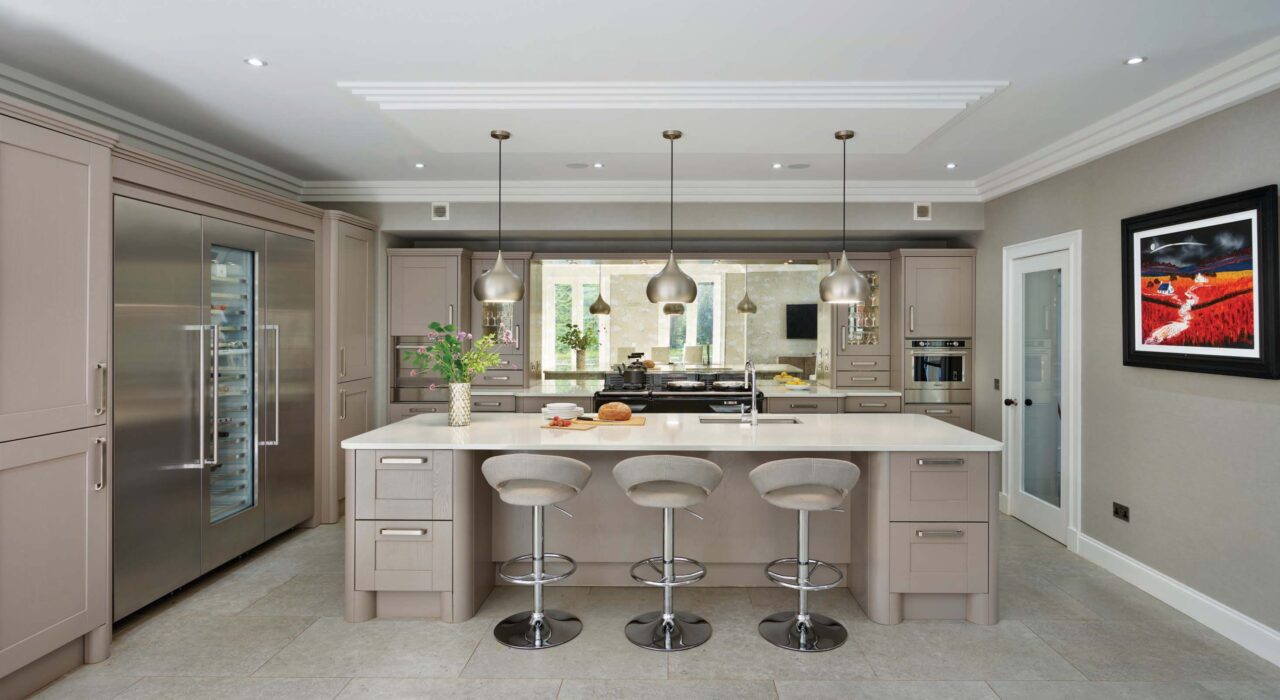
How NH Kitchen Design Helps You Avoid These Mistakes
As a standards-approved installer, we understand exactly how to blend exceptional craftsmanship with practical planning. Our end-to-end service covers everything from initial design consultation through to completed installation and aftercare, ensuring your kitchen is not just beautiful but built to enhance your daily life.
Every NH Kitchen Design project begins with understanding your specific needs, carefully assessing your space’s potential and constraints, and guiding you through style choices, material selections, and layout options. This collaborative approach creates a genuine partnership where the stress is taken off your shoulders.
Our process includes detailed 3D visualisations so you can see exactly how your finished kitchen will look and function before any work begins. This technology allows us to refine designs and resolve any potential issues while changes are still easy and cost-free to implement.
Additional Considerations for Kitchen Success
Beyond avoiding major mistakes, several smaller details can significantly impact your kitchen’s success:
Electrical Planning: Ensure adequate power points in convenient locations, including USB charging stations and dedicated circuits for high-power appliances. Consider future electrical needs for smart appliances and home automation systems.
Workflow Zones: Beyond the basic triangle, consider how you use your kitchen for different activities. Baking zones need ample counter space and ingredient storage, while coffee stations benefit from dedicated water access and electrical points.
Maintenance Access: Ensure all appliances and systems remain accessible for routine maintenance and repairs. This includes space around dishwashers for door opening and access panels for boiler servicing.
Sound Management: Consider noise levels from appliances, especially in open-plan homes. Soft-close mechanisms, quality extraction fans, and dishwasher insulation all contribute to a more pleasant kitchen environment.
Real-World Success Stories
Our experience across hundreds of UK kitchen installations has taught us that every home presents unique challenges and opportunities. From Victorian terraces with period constraints to modern new-builds with open-plan living, we’ve developed solutions that work in the real world.
Recent projects include transforming a narrow galley kitchen in Manchester into a highly functional family space through clever storage and lighting design, and creating a sophisticated cooking area in a London flat where every centimetre was optimised for both storage and style.
View more examples in our completed kitchen projects gallery to see how we’ve helped homeowners across the UK avoid common mistakes and create their ideal kitchens.
Industry Insights and Trends
The kitchen design industry continues to evolve, with new trends emerging that address common pitfalls we’ve identified. Smart storage solutions now include integrated charging stations for devices, while advanced lighting systems offer programmable scenes for different activities.
Sustainability has become increasingly important, with homeowners seeking eco-friendly materials and energy-efficient appliances that reduce environmental impact while lowering running costs. Our team stays current with these developments, ensuring our designs incorporate the latest innovations that genuinely improve daily kitchen use.
Conclusion: Design Smart, Live Better
Every kitchen design mistake we’ve discussed can be avoided with professional guidance and thoughtful planning. The key is working with experienced designers who understand both the technical requirements and the daily realities of kitchen use.
Whether you’re renovating a compact galley kitchen, creating a family-friendly cooking space, or designing a sophisticated culinary environment, trust NH Kitchen Design to help you sidestep these common pitfalls. Our expertise ensures you’ll love your new kitchen not just on installation day, but for many years to come.
With our bespoke solutions, premium materials, and proven process, we help UK homeowners create kitchens that are both stunning and supremely functional. Don’t let avoidable mistakes compromise your investment or your daily enjoyment of one of your home’s most important spaces.
Ready to design your dream kitchen the right way? Book your free design consultation to discuss your project with our experienced team
No related posts.